Cambodia – Young Bunong Woman Uses Her Voice to Preserve Culture and Empower Girls
By Rin Ousa Cambodianess May 17, 2026, 9:00 AM
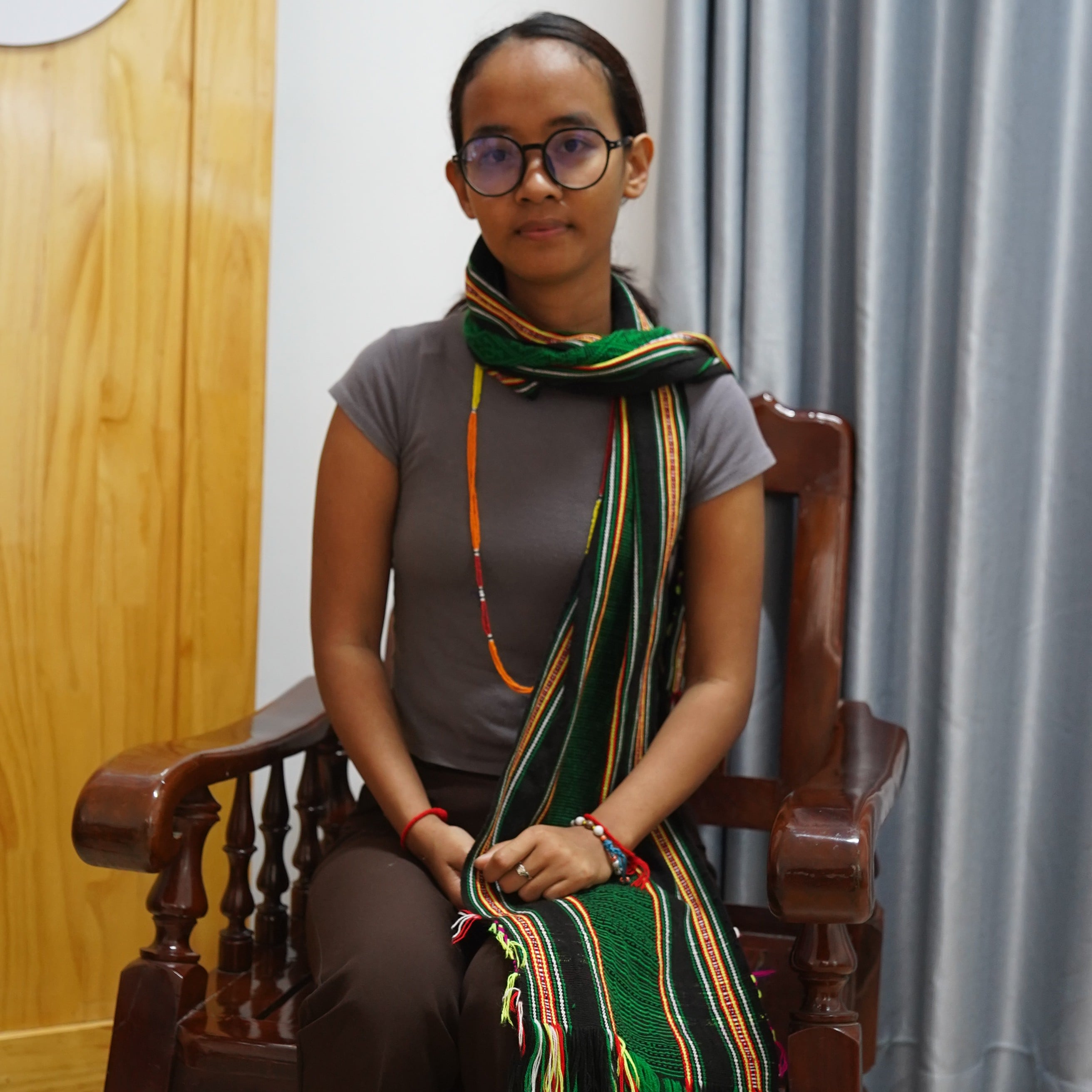
Sam At Rachana, a member of the Bunong Indigenous community. (Moeurn Makthong / ThmeyThmey Digital Media)
PHNOM PENH – Sam At Rachana, a member of the Bunong Indigenous community, has been documenting her community’s culture and traditions as part of her effort to promote and preserve them.
Originally from Keo Seima district in Mondulkiri Province, Rachana, 25, holds a bachelor’s degree in Law from the Royal University of Law and Economics.
To contribute to her community, Rachana now works as a researcher documenting Bunong culture and traditions.
“We never had documents about our own people, particularly those created by our own people. It’s the first time we have ever had that. As an Indigenous young person, I find it crucial to do something for my own people,” Rachana said.
Through her Facebook page, “Voices of the Forest and Rachana Sam At,” she also shares stories about forest-based livelihoods, Bunong culture, and Indigenous communities from other countries.
Beyond cultural preservation, Rachana advocates against child marriage, an issue that remains a serious concern in her community.
Her experiences through exchange programs and educational opportunities have also inspired her to encourage young girls to pursue higher education.
https://if-cdn.com/ph0kX4aa Beyond child marriage, she has observed that her Indigenous community faces several critical challenges, ranging from limited access to education and inadequate infrastructure to the gradual loss of culture and land-related concerns.
“We do not have enough schools and lack proper infrastructure for students to travel. Our culture is beginning to fade because we are influenced by outside cultures. We are also concerned about our language, as young people no longer speak it,” Rachana said.
While recognizing that there has been some discrimination toward Indigenous peoples, which makes some hide their identity out of discomfort and embarrassment, she seeks to challenge that perception and inspire change.
“Being Indigenous is a privilege, and I want to show them that it does not stop you from pursuing higher education or going abroad. I want to inspire them to believe that they can go anywhere they want,” she added.


Recent Comments