From sponsored children to community leaders: Lives transformed across Cambodia
Raksmey Hong The Phnom Penh Post Tue, June 2, 2026
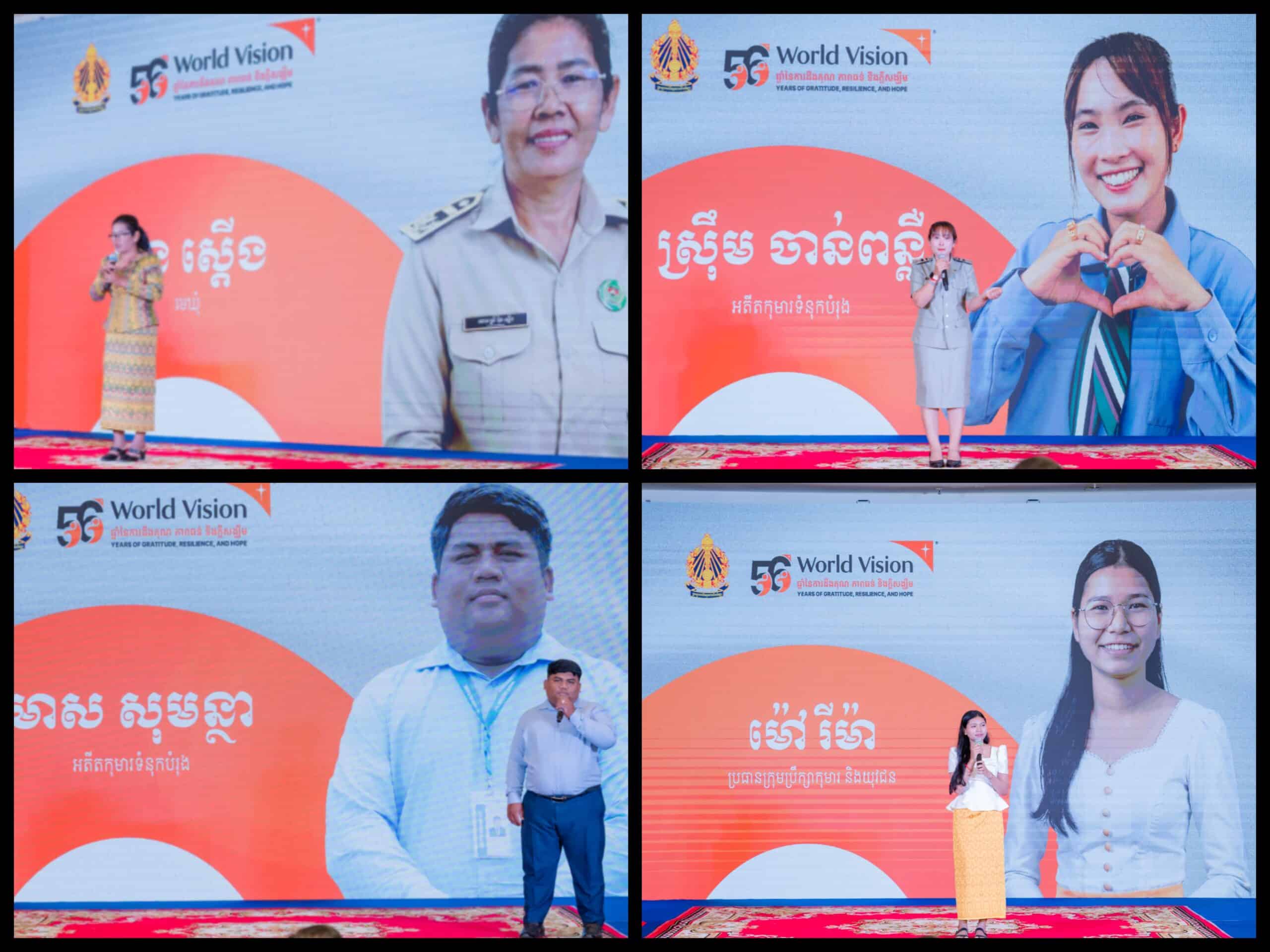
PHNOM PENH – A former impoverished child who became a bank branch manager, a village girl who grew into a commune councillor, a student aspiring to create jobs for fellow Cambodians and a female commune chief who once saw herself only as a housewife are among the countless living examples of how decades of community development have reshaped lives across Cambodia.
Their stories were shared during celebrations marking the 56th anniversary of World Vision’s presence in Cambodia, where former beneficiaries and community leaders reflected on how investments in children, education and local development continue to generate impacts long after projects have ended.
Speaking at the event, Minister of Education, Youth and Sport Hang Chuon Naron noted that World Vision has supported nearly five million Cambodians over the past five decades, including around three million children, through programmes in education, health, water and sanitation, child protection and community development.
He described the organisation’s work as helping Cambodia move through different stages of recovery, from civil war and reconstruction to development and resilience-building.
For Meas Somuntha, from Battambang province’s Samlot district, the impact was deeply personal.
Growing up in an area heavily affected by landmines and unexploded ordnance left behind by decades of conflict, he said many families lived in fear while trying to farm their land.
“As a child, I had no clear goal and no hope for what my future would look like,” he recalled.
His outlook changed after joining World Vision’s child sponsorship programme.
Alongside other children, he attended activities focused on hygiene, education and personal development while receiving basic school supplies such as books and pens.
He said one exercise, in which children were asked to draw their dreams and future ambitions, became a turning point.
“It was the first time I understood what a dream and a future could mean,” he said.
Today, Somuntha has achieved the aspirations he imagined as a child. After starting his career as a credit officer at VisionFund Cambodia, he eventually became a branch manager at a bank in Samlot district.
More importantly, he said he is now able to give back to the same community that once supported him.
“I am no longer receiving support. Today, I am able to provide support according to my own capacity,” he said.
He also noted that community savings groups established with World Vision’s support more than a decade ago remain active and continue benefiting local families.
Hundreds of kilometres away in Kampong Chhnang province’s Kampong Leaeng district, commune councillor Srem Chanponleur described how a simple question changed the course of her life.
When World Vision staff interviewed children in her village in 2006, they asked what she wanted to become in the future.
Growing up in a remote area where many girls dropped out of school because of distance and safety concerns, she could only imagine following her parents’ path as a farmer.
At the time, she lacked the confidence to envision a different future.
Through youth training programmes organised by the organisation, she learned leadership, communication and community facilitation skills.
The experience gradually transformed a shy rural girl into a confident community leader.
She said World Vision staff played a critical role in encouraging her to remain in school when she considered dropping out in Grade 9.
That support enabled her to continue her studies and eventually serve her community as an elected local official.
“World Vision planted the seeds of leadership in children and showed girls that they could become leaders too,” she said.
The organisation’s impact has also extended into urban communities.
Mao Rima, a 21-year-old third-year biotechnology engineering student in Phnom Penh, said she grew up in a community struggling with waste management problems, domestic violence and school dropouts.
After joining World Vision-supported youth activities at age 15, she and other young people began identifying local problems and designing solutions.
Their activities included awareness campaigns on child rights, violence prevention, positive parenting, environmental cleanliness and climate adaptation.
Working alongside local authorities and community leaders, they mobilised children and youth to improve sanitation and strengthen environmental awareness.
For Rima, the programmes provided more than technical skills.
“They gave me confidence, leadership abilities and a clear vision for my future,” she said.
The experience eventually led to an opportunity to participate in discussions on sustainable development at the United Nations.
Inspired by that exposure, she now hopes to establish a social enterprise that supports Cambodian farmers, promotes local products and creates jobs in communities to reduce labour migration.
“Even a girl from a poor community can create positive change and inspire others,” she said.
Beyond individual success stories, local leaders say the most significant measure of impact is whether projects continue after development organisations leave.
For In Steung, commune chief of Chouk Chey commune in Preah Vihear province, the answer is clear.
More than three years after World Vision completed its work in her area, she said many of its initiatives remain active because local authorities incorporated them into the commune’s five-year development plans and rolling three-year investment programmes.
Village health support groups established by the organisation continue operating with commune funding. Community preschools launched under the programme remain open, providing early childhood education to children aged three to five in remote villages.
Agricultural savings groups initially formed with World Vision’s support have evolved into functioning agricultural communities that help farmers increase production and access markets.
At the same time, social accountability initiatives have strengthened citizens’ understanding of their rights and encouraged greater use of public services.
“We often worry that activities will disappear when development partners leave,” In Steung said. “But what we see today is that these achievements have taken root and become stronger.”
Her own journey mirrors that transformation.
Before becoming involved in World Vision-supported education programmes, she described herself simply as a wife, mother and housewife.
After volunteering as a community preschool teacher in 2006 and 2007, she gained confidence and discovered new opportunities for leadership.
She was elected to the commune council in 2008 and has since risen to become commune chief.
“World Vision helped me realise that women can do more than stay at home. Women can lead,” she said.
Taken together, the stories illustrate a common theme echoed throughout the anniversary celebration: investments in children often produce benefits that extend far beyond a single generation.
Many of those who once received assistance as children are now leaders, professionals, entrepreneurs and public servants helping others in their communities.
For education minister Naron, these outcomes reflect the broader resilience of Cambodia itself.
From supporting children during years of conflict and recovery to helping communities confront modern challenges such as climate change, displacement and poverty, he said development efforts have contributed to building a generation capable of shaping the country’s future.
As Cambodia continues its development journey, the minister expressed hope that the country would one day move from being a recipient of assistance to becoming a nation able to support others in need.
The stories shared during the anniversary event suggest that transformation may already be underway — one child, one family and one community at a time.


Recent Comments