Thailand sees Australia and Japan as intermediaries in tackling Myanmar’s pollution of watercourses
Thailand sees Australia and Japan as intermediaries in tackling Myanmar’s pollution of watercourses
by Thai PBS WorldMon, April 27, 2026
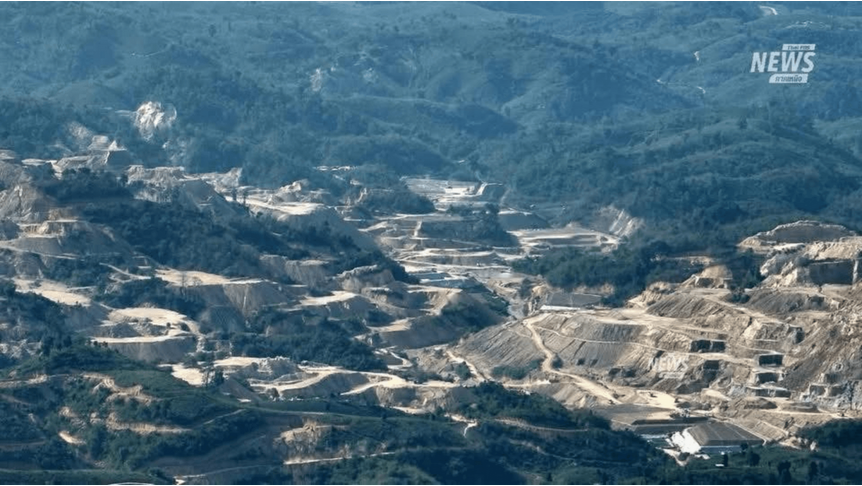
File photo: A mountainous view of the Northern of Thailand
Thailand’s Ministry of Natural Resources and Environment has announced plans to engage Australia and Japan as neutral intermediaries in efforts to address toxic heavy metal contamination of the Kok, Sai, Ruak, and Mekong rivers. The pollution is believed to be from rare earth mineral mining in Myanmar’s Shan State.
“Involving third-party nations is crucial for diplomatic transparency and long-term resolution,” said Natural Resources and Environment Minister Suchart Chomklin after. He was speaking following a high-level disaster management meeting chaired by Prime Minister Anutin Charnvirakul on April 20.
According to the Thailand’s Pollution Control Department (PCD), high levels of arsenic have been detected in northern Thai watercourses, particularly during the dry season when lower water volumes lead to higher concentrations of sediment.
“Australia and Japan are major importers of these minerals, which pass through Thailand. Their involvement as mediators is essential because Myanmar may be more receptive to their technical findings than to direct claims from Thailand,” Suchart noted.
The proposed cooperation would focus on gaining access to conduct water quality testing in Myanmar, deploying advanced technology to convert toxic river sediment into construction materials and alleviating public anxiety over the safety of drinking water, fish and crops.
PCD Director General Surin Worakijthamrong reported that, while arsenic levels in the Kok River fluctuate, levels in the Ruak and Mekong rivers remain above safe levels at almost every testing location.
To restore public trust, the PCD is seeking an emergency budget to install 18 automated monitoring stations. These would provide 24-hour real-time water quality data along the Kok, Mekong and Salween rivers.
“The goal is to ensure every village knows exactly when or whether the water is safe,” Suchart added. “We need to communicate clearly through health and local authorities.”
Despite the high sediment levels in raw river water, representatives from the Ministry of Public Health confirmed that processed tap water, agricultural produce and livestock remain safe to consume.
A joint investigation by several departments, including agriculture and livestock development, found that arsenic levels in vegetables, fruit and meat currently meet safety standards.
Health officials are, however, expanding surveillance of the health of over 1,400 farmers living in high-risk areas across seven districts.
The move highlights the complexity of the supply chain of rare earth elements, which are vital for modern electronics. While China remains the dominant global producer, Myanmar has emerged as another significant source, with much of the ore transiting through Thailand to markets like Japan and Australia.
While the meeting in Chiang Mai focused primarily on immediate measures for dealing with forest fires and their contribution to PM2.5 airborne pollution, the contamination of the northern river basins has emerged as a critical transboundary challenge requiring urgent international intervention.


Recent Comments