Cambodia – Mondulkiri serves up coffee, elephant encounters and waterfalls
Vishnu Mohan / Khmer Times Mon, June 22, 2026
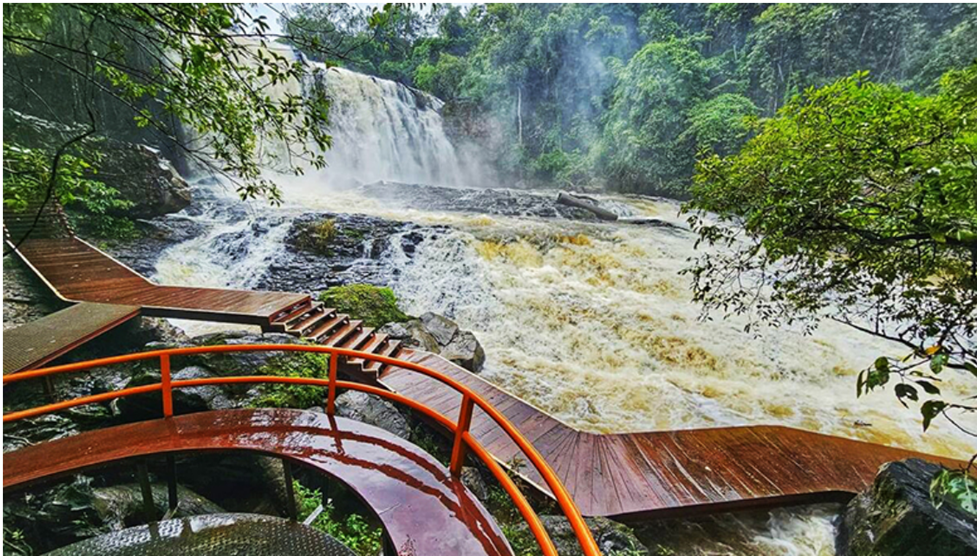
Bousra Waterfall is the most popular eco-tourism site in Mondulkiri province. It is accessible through Pou Tis village, Bousra commune, Pech Chreada district. Ministry of Tourism
The journey to Mondulkiri province is unlike any other in Cambodia. As the busy city fades behind, the landscape shifts from urban sprawl to rolling hills. Dense forests line the winding roads and the air turns crisp as the temperature drops. It feels as though one has stepped into a different country.
As Cambodia’s largest province, the northeastern highland is famous for its breathtaking scenery, cool climate and indigenous culture. It offers a vast, green landscape and a peaceful atmosphere that attracts both domestic and international travellers looking to escape the heat of the lowlands.
A key attraction is the Elephant Sanctuary located in the forest valley of Sen Monorom town. Unlike traditional venues, this sanctuary focuses entirely on protecting and caring for rescued domestic elephants, allowing them to roam freely in their natural habitat under a strict no-riding and no-hooks policy. Visitors walk alongside the animals through the jungle, feed them locally grown bananas and observe them bathing at a jungle waterfall. For many travellers, spending time with these animals stands out as the most memorable part of their trip.The province also features several natural landmarks, including the famous Bou Sra Waterfall. Surrounded by a lush canopy, it stands as the most visited site in Mondulkiri. During the rainy season, heavy torrents create a powerful spectacle, while the cooler months offer ideal conditions for hikers and campers to explore the natural trails by quad bike. The rolling hills provide beautiful scenery, especially during sunrise and sunset when the vast valley is covered in soft golden light.
Mondulkiri is home to the Bunong people, one of Cambodia’s indigenous communities whose traditions, culture and agrarian lifestyle have survived for generations. Visitors can learn about their customs, farming practices and deep connection to the land, which provides a better understanding of the province.
Tourists frequently try on traditional Bunong clothing, an activity that has remained popular for decades. Many enjoy taking photos in the colourful outfits while standing in front of the waterfall, sitting on the large rocks or using the decorated swings near the water. It provides an engaging way to experience a small part of the indigenous culture.
The local culinary scene provides another highlight, with regional restaurants serving classic Cambodian dishes alongside indigenous cuisine. Mondulkiri is also famous for its coffee beans.
Thriving in the cooler climate and fertile volcanic soil, the locally grown coffee has become one of the province’s premier agricultural products.
The beans are exported to Vietnam, Russia, Japan, South Korea and China. Visitors can tour the plantations to see how the crops are harvested and sample the coffee while taking in the countryside views.
The peak travel window runs from November to February when the post-rain temperatures drop, leaving the waterfalls full and the landscape green, making Mondulkiri a premier destination for travellers seeking scenery and serenity.


Recent Comments