From scrolling to studying: Cambodia Ministry calls on youth to rethink digital habits
Raksmey Hong The Phnom Penh Post Thu, June 18, 2026
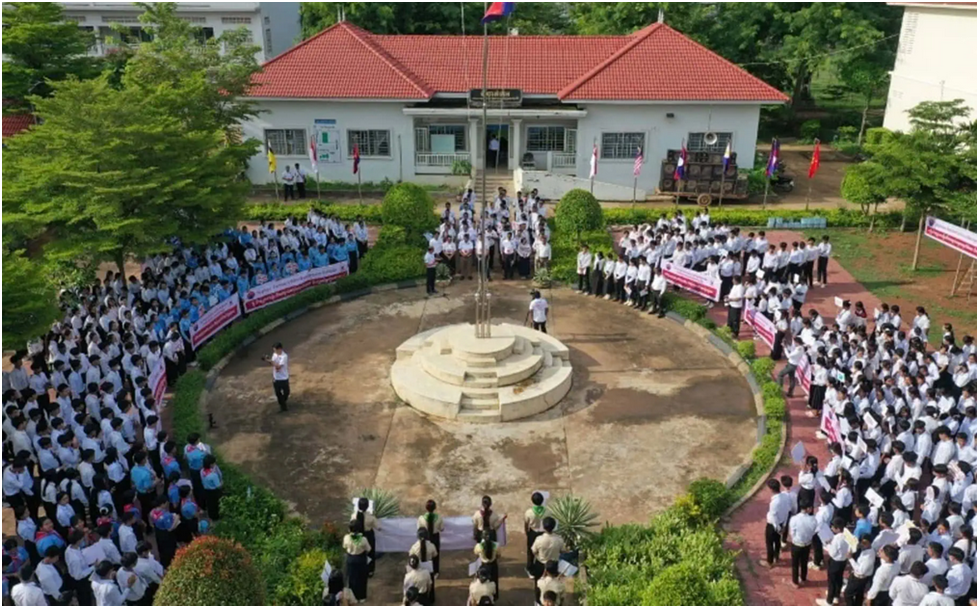
The information ministry expanded its nationwide “Say No to Fake News” campaign to Rovieng High School in Preah Vihear province, where more than 1,000 students on June 17 gathered to discuss responsible social media use and media literacy. Supplied
Information ministry spokesperson Tep Asnarith encouraged students to make technology a tool for education and personal growth rather than allowing it to become a distraction. Supplied
Share
Cambodian youths are being urged to rethink how they spend their time online, with the Ministry of Information warning that digital technology can either become a gateway to knowledge or a source of misinformation, scams and lost opportunities.
The message was delivered on June 17 as the ministry expanded its nationwide “Say No to Fake News” campaign to Rovieng High School in Preah Vihear province, where more than 1,000 students gathered to discuss responsible social media use and media literacy.
Speaking at the event, ministry spokesperson Tep Asnarith encouraged students to make technology a tool for education and personal growth rather than allowing it to become a distraction.
“When we use technology for the right purpose, it will bring benefits and value to us,” he said.
“Beyond what we learn in classrooms and from our teachers, digital technology in our hands allows us to gain knowledge every day,” he added,
He urged students to take advantage of the digital learning platforms and educational applications developed by the Ministry of Education, Youth and Sport, saying they offer extensive resources that can help young people expand their knowledge and improve their academic performance.
The message reflects a growing concern among policymakers over the ways young Cambodians interact with digital technology at a time when social media has become deeply embedded in everyday life.
While online platforms offer unprecedented access to information, they have also become fertile ground for misinformation, online fraud and harmful content that can easily spread among young users.
Asnarith warned that using digital technology without clear purpose – whether through excessive gaming, indiscriminate social media use or sharing unverified information – could have lasting consequences.
“Using digital technology in the wrong way wastes both time and money, affects our future and may even make us victims of online scams,” he said.
He also stressed the importance of verifying information before sharing it online, describing young people as an important frontline in preventing the spread of false or misleading content.
“Before pressing the share button, users should verify the source carefully,” he said, adding that “Stopping the spread of fake news starts with each of us.”
The warning comes as governments around the world grapple with the rapid spread of misinformation on social media, particularly among younger generations who spend a significant portion of their daily lives online.
Cambodia has increasingly focused on promoting media and information literacy in schools, with authorities arguing that critical thinking and responsible online behaviour are essential skills in the digital era.
At the Preah Vihear event, Asnarith called on young Cambodians to become responsible digital citizens and active contributors to a healthier information environment.
“Ending the sharing of false information and promoting only truthful, positive and useful content for communities is a contribution to protecting peace, stability and national development,” he said.
Preah Vihear deputy governor Nop Vuthy echoed the message, saying the campaign comes at a crucial moment as digital technology and social media continue to expand rapidly across the country.
“Today, people – especially young people and students – can access information faster, more easily and more widely than ever before,” he said. “This creates valuable opportunities for learning, research, communication and knowledge development.”
However, he added that those opportunities also come with responsibilities, requiring young users to develop the skills needed to distinguish reliable information from false or manipulative content.
Students attending the event pledged to support the Ministry’s campaign by rejecting fake news and promoting responsible social media use in their schools and communities.
The “Say No to Fake News” campaign entered its second phase on May 18 under the theme “Strengthening Media and Information Literacy for Information Safety”.
Officially launched by information minister Neth Pheaktra, the initiative is being rolled out in secondary schools and high schools across Phnom Penh and several provinces, including Preah Vihear, Takeo, Kampong Speu and Kampot, with plans to expand nationwide throughout the year.
For many of the students gathered in Rovieng this week, the message was simple: in an age of endless scrolling, the greatest opportunity may lie in choosing to learn instead.


Recent Comments