A licence for eviction? Thailand’s ethnic protection bill sparks fierce opposition
by Thai PBS World’s General Desk February 15, 2025
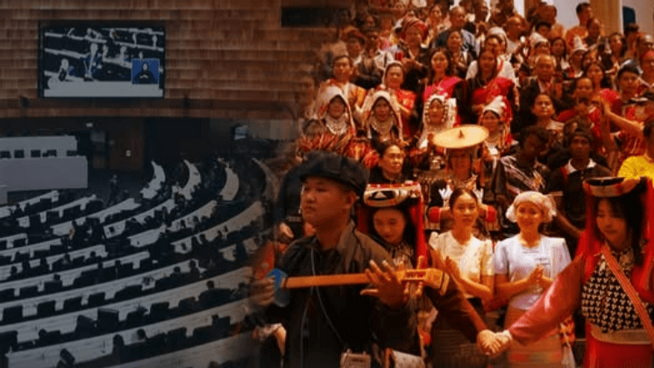
Photo by the Active
BANGKOK – A draft law designed to protect Thailand’s indigenous peoples and ethnic minorities from decades of marginalisation is at risk after a key provision was removed during its second reading in Parliament.
The change to the Bill on the Protection and Promotion of Ethnic Ways of Life has raised concerns it will fail to stop years of violent evictions of forest dwellers from their tribal lands.
For Yupin Ngamying, a representative of the Karen Network for Justice, the stakes are deeply personal. Standing amid the rolling hills of her ancestral land in Suphan Buri’s Dan Chang district, part of Phutoei National Park, she describes how the loss of land rights has affected her family and community.
“They have taken thousands of rai of land from us,” she laments.
“Each local Karen family now only has about five rai [about the size of a football field], which is not enough for their traditional shifting cultivation lifestyle. Countless ethnic people have suffered at the hands of state-development projects that fail to understand ethnic ways of life.”
Controversy over Article 27
Yupin is dismayed by the removal of Article 27 from the draft bill on protecting ethnic ways of life. The article required authorities to allow local ethnic communities living in reserves to manage their land, exempting them from forest laws and other regulations.
“Article 27 was crucial as it mandated that authorities had to sign agreements with local ethnic communities in areas protected under the bill,” Yupin explained.
Its removal has also ignited a debate on the balance between conservation, development, and the rights of ethnic communities.
The article was opposed by government MPs, who cited concerns about potential environmental damage, unsustainable use of resources, and encroachment. Some argued the provision gave preferential treatment to ethnic groups over other Thai citizens.
“Letting ethnic groups live in forests will not stop people from encroaching on forest land,” argued Pheu Thai MP Sakda Vicheansil, citing his experience as a former Department of National Parks, Wildlife and Plant Conservation (DNP) official.
He also dismissed claims that ethnic communities face routine evictions, saying that he never witnessed DNP staff arresting ethnic people on their ancestral lands during his time with the department.
“Legal action was only ever taken when they tried to expand their farming area further into forest reserves,” he said.
Nan Boonthida Somchai, a government MP from Bhumjaithai, said her party opposed Article 27 because it would have favoured certain ethnic communities over other Thais.
“Everyone should be equal under the law,” she said.
Sakda also sought to quell fears among ethnic forest dwellers, saying enforcement of new forestry laws would not trigger their eviction from old settlements.
A question of equality
Advocates of Article 27 counter that it is essential for protecting the traditional ways of life of ethnic communities.
Lawyer Surapong Kongchantuk, an adviser to the Council of Indigenous Peoples in Thailand (CIPT), argues the article aims to ensure equality, not create special privileges. He said MPs should understand that ethnic people are not underprivileged individuals in need of special rights, like the elderly and people with disabilities.
“The article was not meant to place ethnic people above others. It was drafted to ensure ethnic people are treated as equals,” he said.
He also dismissed claims that Article 27 would lead to deforestation, or even the creation of a separate state within Thailand, as some have suggested.
“There is no provision that would allow that to happen,” he emphasised.
“It’s important to note that the article clearly states that people living in ethnic protection areas must conserve natural resources and use them sustainably.”
Fundamental flaws remain
Other critics argue that even with Article 27, the bill has three major flaws meaning it would fail to protect the lives and traditions of ethnic people.
Phachara Khamchamnan, coordinator for the People’s Movement for a Just Society (P-Move), said the bill’s first flaw is the deliberate removal of the term “indigenous tribes”.
The second, he said, is its failure to prescribe punishment for state officials who fail to protect ethnic people.
And third, it fails to protect ethnic people’s right to manage their land and resources despite the risk of their culture disappearing if they are evicted from ancestral territory.
“Most ethnic people are deeply attached to land, forests, the sea and waterways. Their life security will increase if given the right to manage these natural resources,” Phachara said.
He pointed out that many ethnic communities lack official land documents, making them vulnerable to displacement. “If we want to create a fair and equal society, we must protect them,” he said.
Deprived of legal land rights, ethnic people find it impossible to protect their settlements when government projects like drainage tunnels or dams are earmarked for their land, he added.
Opponents of Article 27 should also realise, said Phachara, that the country would not lose national park territory that became part of land under ethnic community protection.
“The land-management agreements between authorities and local ethnic caretakers would place restrictions on what the communities could do,” he said.
Voices from the community
Yupin said Karen people in her hometown had suffered from the government’s unilateral moves to grant logging concessions, establish a research station, and set up Phutoei National Park.
“Countless ethnic people have suffered at the hands of state-development projects that fail to understand ethnic groups’ way of life,” she said.
Niraporn Chapor, a 23-year-old Karen living in Chiang Rai, shared these concerns, saying that ethnic people have been marginalised in Thai society for too long and it was time for change.
“You can’t really say we are trying to claim special privileges. We just want the same rights as others,” she said.
Niraporn believes ethnic communities, with their deep understanding of local ecosystems, can play a vital role in forest conservation if given the chance. She added that they could help protect forests if they were engaged in resource management.
Government’s view
Culture Minister Sudawan Wangsuphakijkosol said she acknowledged the importance of ethnic communities and was pushing hard for legislation to protect them.
“Though the bill that recently passed the second and third readings differs from our initial intention, there is still a chance it can be improved during Senate deliberation,” she said.
Sudawan also pledged to continue working for ethnic communities, adding that her ministry was pushing for additional policies and measures to protect them.
SOURCE – Thai PBS World’s General Desk February 15, 2025

 ASEAN Digest
Recent Comments